Disposing of a refrigerator requires more planning than setting it at the curb, especially because refrigerants, doors, and local bulk item rules all matter. This guide explains how appliance removal works for old fridge removal across the United States.
Why Refrigerator Disposal Takes More Planning Than Regular Trash
Figuring out how to dispose of refrigerator units correctly can be surprisingly complicated. A refrigerator is not like a bag of trash, a broken chair, or a small appliance you can lift into a car without much thought. It is heavy, awkward, often still connected to food residue or ice buildup, and contains materials that may be regulated in your area.
For homeowners replacing a kitchen appliance, landlords turning over a rental, or families cleaning out a garage, the biggest issue is usually not deciding that the fridge has to go. The harder part is knowing where to dispose of refrigerator units without creating a safety problem, violating local rules, or leaving a bulky item on the curb for days. Many communities have restrictions on refrigerants, compressor handling, appliance doors, and bulk pickup scheduling.
Professional appliance removal can simplify old fridge removal when you do not have a truck, an extra set of hands, or time to call around to transfer stations. Still, it helps to understand your options before you choose the best route.
.webp)
Why Refrigerator Disposal Rules Vary by Community
One of the most confusing parts of refrigerator disposal is that the rules can change from one city, county, or waste district to another. Some municipal programs allow scheduled bulk pickup for appliances. Others require residents to bring refrigerators to a designated transfer station, recycling center, or scrap metal facility. In some places, the refrigerant must be removed by a certified technician before the appliance can be accepted.
Weather and housing patterns also affect how people deal with old refrigerators. After storms or basement flooding, a fridge may need to be removed quickly because of food spoilage and odor. During peak moving months, apartment communities and suburban neighborhoods often see more abandoned appliances near dumpsters, which can lead to fines or rejected pickups. In renovation-heavy areas, contractors may remove cabinets and flooring but leave the old refrigerator for the property owner to handle separately.
Before dragging a fridge to the curb, check for these local requirements:
- Whether appliance bulk pickup requires an appointment or special sticker
- Whether doors must be removed or taped shut for safety
- Whether refrigerant recovery documentation is required
- Whether the item must be placed curbside only during a specific window
- Whether apartment dumpsters prohibit appliances entirely
- Whether local transfer stations charge appliance disposal fees
Apartments, Rentals, and HOA Neighborhoods
Refrigerator disposal can be especially tricky in apartments, rental homes, townhomes, and HOA-managed neighborhoods. A fridge left beside a dumpster may be considered illegal dumping, even if the person leaving it lives on the property. Many apartment communities require tenants to coordinate large appliance removal through management because access points, elevators, loading zones, and trash enclosures are shared.
Landlords and property managers often need faster solutions. A vacant unit cannot be cleaned, photographed, or shown properly if an old refrigerator is blocking the kitchen or garage. HOAs may also limit how long bulky items can sit outside, which makes scheduled pickup windows important. If you are handling a move-out cleanout, using a removal team that can lift, load, and haul the refrigerator in one visit often prevents extra delays.
How to Prepare an Old Refrigerator for Removal
Whether you plan to use a local bulk program, drop-off site, retailer haul-away, or professional old fridge removal, a little preparation makes the process safer. Refrigerators are top-heavy and can leak water if ice trays, water lines, or freezer compartments are not handled first.
- Empty all food and shelves. Remove leftovers, condiments, produce drawers, and any loose glass shelves that could slide or break during transport.
- Unplug the refrigerator early. If possible, unplug it several hours before removal so the freezer can thaw. Place towels nearby if there is ice buildup.
- Disconnect water lines carefully. Refrigerators with ice makers or water dispensers may have a line behind the appliance. Turn off the supply valve before disconnecting anything.
- Wipe out spills and residue. Cleaning the interior reduces odor and makes the appliance safer for haulers or recycling workers.
- Secure the doors. Tape or strap the doors closed for transport unless your local disposal program specifically requires door removal.
- Clear the path. Move rugs, small furniture, pet bowls, and boxes so the appliance can be carried without scraping walls or damaging floors.
If the refrigerator is in a basement, tight galley kitchen, high-rise unit, or garage packed with storage boxes, mention that before scheduling pickup. Stairs, narrow turns, and long carry distances can change the equipment and crew needed for safe appliance removal.
Refrigerator Disposal Options Compared
There is no single answer to where can I dispose of a refrigerator because the best option depends on timing, access, local rules, appliance condition, and whether you can transport it. The comparison below outlines the most common choices.
| Disposal option | Best for | Possible drawback |
|---|---|---|
| Municipal bulk pickup | Residents with flexible schedules and approved curb access | May require appointments, fees, stickers, or refrigerant rules |
| Transfer station or recycling center | People with a truck and help lifting the refrigerator | Drop-off hours may be limited and fees may apply |
| Retailer haul-away | Replacing a refrigerator through a store delivery | Usually tied to new appliance delivery and may not cover extra fridges |
| Donation or reuse | Working refrigerators in clean, safe condition | Many charities have age, efficiency, and pickup restrictions |
| Professional appliance removal | Fast removal from homes, rentals, garages, and apartments | Costs more than some municipal programs but includes labor and hauling |
.webp)
Best Option for Busy Homeowners and Landlords
If you have time, a vehicle, and a disposal site nearby, a transfer station may work. If you are already buying a new refrigerator, retailer haul-away may be convenient. But for many homeowners, renters, and landlords, the practical issue is labor. Refrigerators are difficult to move without scratching floors, denting door frames, or hurting your back.
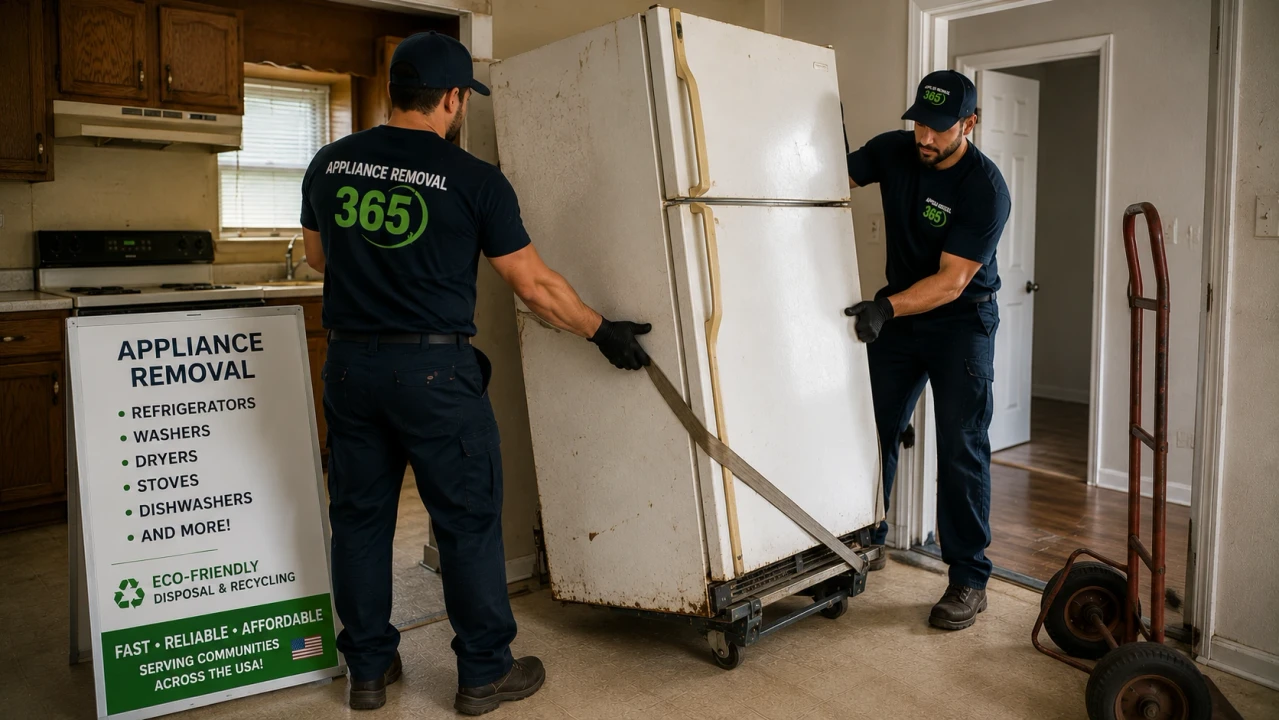
Professional appliance removal is often the best fit when the fridge is in a second-floor apartment, a tight kitchen, a rental property between tenants, or a garage packed with other unwanted items. It is also useful when you need the refrigerator gone before cleaners, painters, real estate photographers, or new tenants arrive. For a simple path, schedule old fridge removal with an appliance removal crew that can handle lifting and hauling without relying on your trash day.
What Affects Old Fridge Removal Costs
Old fridge removal costs can vary because not every refrigerator pickup is the same. A compact garage fridge near the driveway is easier to remove than a full-size French door refrigerator in an upstairs condo. A clean, disconnected appliance is simpler than one filled with spoiled food after a power outage.
Common factors that influence pricing include:
- Size and weight: Larger refrigerators and commercial-style units require more labor.
- Location inside the property: Stairs, elevators, long hallways, and narrow turns can add complexity.
- Number of appliances: Removing a fridge along with a freezer, washer, dryer, or oven may affect the total.
- Condition: Odor, food waste, water leakage, or broken parts may require extra care.
- Disposal requirements: Local recycling and refrigerant handling rules can affect where the appliance goes.
- Urgency: Same-day or next-day pickup may be available depending on schedule and crew capacity.
When requesting a quote, describe the appliance honestly. Share whether it is plugged in, empty, accessible, and located upstairs or downstairs. Photos can also help removal teams understand the job before arrival.
Eco-Friendly Refrigerator Disposal Matters
Refrigerators contain valuable recyclable materials, but they also include components that should not be handled carelessly. Steel, aluminum, copper, plastic bins, glass shelves, and wiring can often be recovered. At the same time, refrigerants, oils, foam insulation, and compressors require responsible handling.
Eco-friendly refrigerator disposal is not just about keeping a bulky appliance out of a landfill. It is about making sure harmful substances are managed correctly and reusable materials are routed to the right facilities. Older refrigerators may also be less energy efficient, which is why many utility programs and recycling initiatives encourage retiring outdated units rather than keeping them as secondary garage fridges.
If the appliance still works, reuse may be an option, but only if it is clean, safe, and accepted by a local organization or buyer. Many donation centers will not accept old refrigerators because of efficiency standards, liability concerns, or pickup limitations. If reuse is not realistic, responsible recycling through a qualified disposal path is usually the better choice.
.webp)
FAQ About Refrigerator Disposal
Refrigerator disposal questions often come up during moves, kitchen remodels, estate cleanouts, and landlord turnovers. Here are practical answers to the questions people ask most often.
Where Can I Dispose of a Refrigerator?
You may be able to dispose of a refrigerator through a municipal bulk pickup program, an approved transfer station, an appliance recycling center, a retailer haul-away program, or a professional appliance removal service. Availability depends on your local rules, the condition of the fridge, and whether refrigerant recovery is required before acceptance.
How Do I Dispose of an Old Refrigerator Safely?
Start by emptying the refrigerator, unplugging it, thawing the freezer, cleaning out residue, and securing the doors for transport. Do not cut refrigerant lines or attempt to remove sealed components yourself. If the fridge is too heavy or located in a difficult area, hiring help is safer than trying to slide it down stairs or lift it into a pickup truck without the right equipment.
Can an Old Fridge Be Recycled?
Yes, many old refrigerators can be recycled, but they should go through the proper channel. Metals, wiring, and some plastic components may be recovered, while refrigerants and oils must be handled according to environmental rules. A qualified disposal or removal provider can help route the refrigerator to an appropriate facility when recycling is available.
The Right Refrigerator Disposal Plan Saves Time and Trouble
Learning how to dispose of an old refrigerator the right way helps you avoid missed pickups, safety hazards, property damage, and disposal mistakes. The key is to plan around local rules, prepare the appliance properly, and choose the option that fits your timeline and property type.
If you are dealing with a kitchen upgrade, rental turnover, garage cleanout, or a broken fridge that needs to leave quickly, professional appliance removal can be the most straightforward solution. Instead of searching repeatedly for where to dispose of refrigerator units or borrowing a truck, you can arrange pickup and move on with the rest of your project.
For fast, practical help with refrigerator hauling, book appliance removal service and get the old fridge out of your home, rental, or garage without the guesswork.

Written by
junk removals 365 team
The Junk Removals365 Team shares expert tips and insights on junk removal, cleanouts, recycling, and clutter-free living, helping homeowners and businesses keep their spaces clean and organized.
Related Resources
Our Related Services
Junk Removal
Full service junk removal for homes and businesses — same-day pickup, upfront pricing, and eco-friendly disposal you can count on.
Furniture Removal
From single pieces to full-room clearouts — we remove any furniture, any size, from any room.
Mattress Removal
Responsible mattress disposal that keeps 90% of materials out of the landfill — any size, any floor.