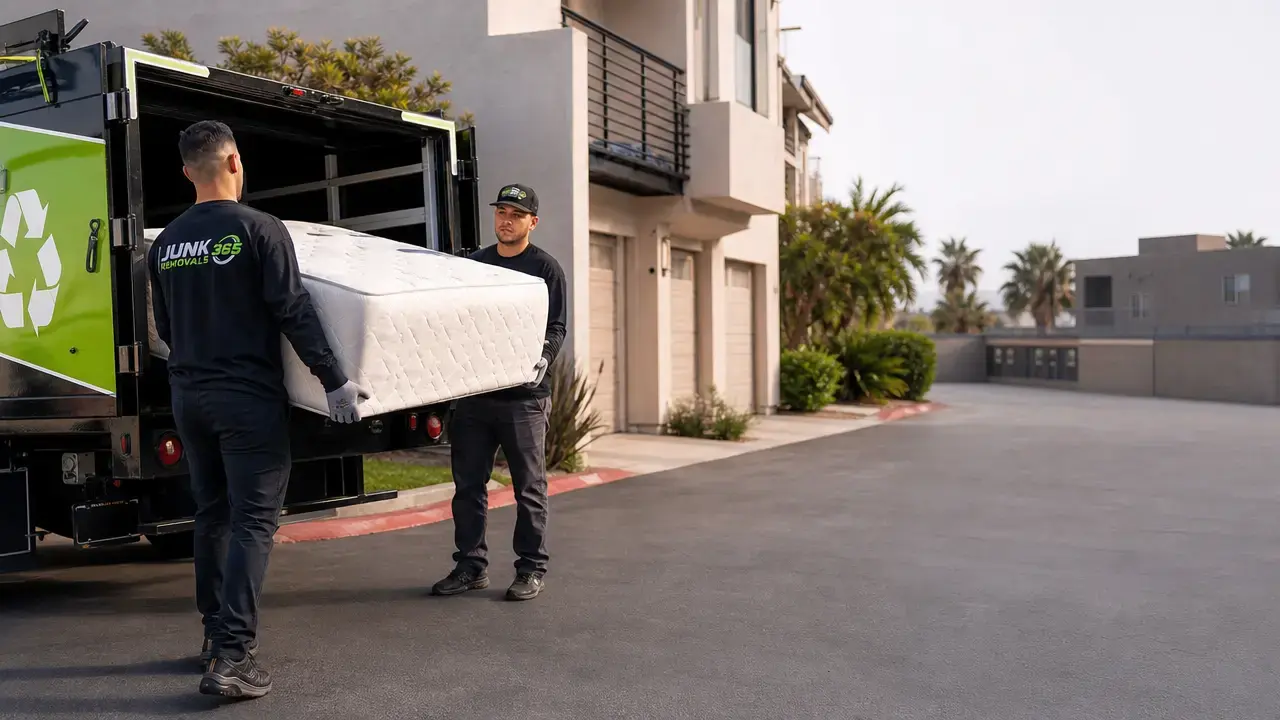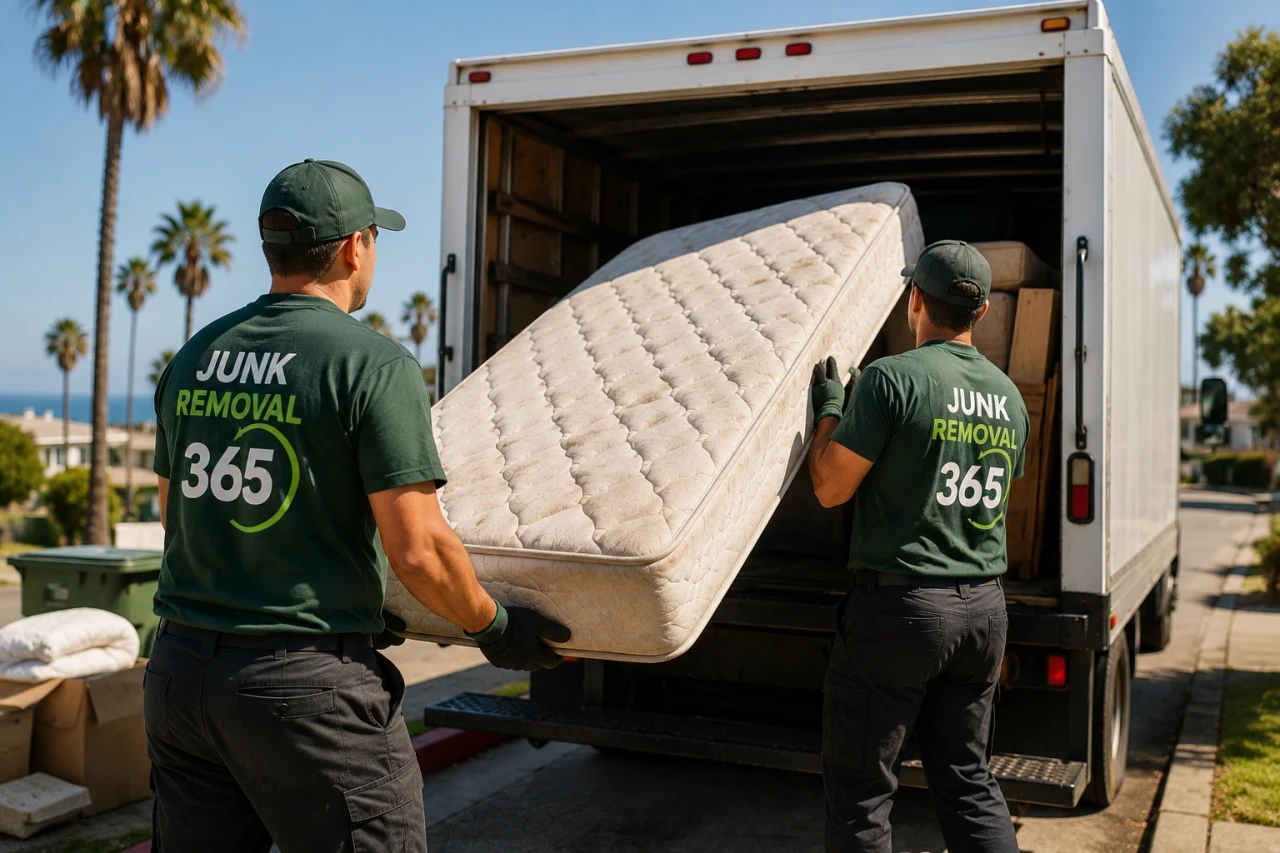
Why California Mattress Disposal Takes Planning
California mattress disposal is not always as simple as dragging an old bed frame and mattress to the curb. Across the state, residents deal with different municipal pickup schedules, apartment rules, HOA restrictions, recycling requirements, and limited space for storing bulky items. A mattress can block a sidewalk, attract moisture during coastal fog or winter rain, or create problems with a landlord if it is left in the wrong place.
Whether you are replacing a guest room bed in Sacramento, clearing out a rental unit in Los Angeles, moving from a Bay Area apartment, downsizing in Orange County, or cleaning a garage in the Central Valley, mattress removal needs a little planning. The goal is to get the item out safely, avoid fines or complaints, and route it toward recycling or proper disposal whenever possible.
This guide walks through the practical options for mattress removal in California, including pickup, recycling, donation considerations, and the local issues that can affect how quickly an old mattress can be removed.
What Makes Mattress Disposal Different in California
California has a strong focus on waste reduction and recycling, and mattresses are a major part of the bulky waste conversation. Mattresses take up a lot of space in landfills, but many of their materials can often be separated and recycled. Steel springs, wood frames, foam, cotton, and fabric components may be recoverable when a mattress is in acceptable condition for processing.
The challenge is that rules are not identical everywhere. A city may allow scheduled bulky item pickup, while a nearby unincorporated area may follow a different system. Some buildings have designated collection rooms. Some HOAs require advance approval before any item is placed near the street. In dense neighborhoods, leaving a mattress outside too early can trigger complaints or sanitation concerns.
Common California-specific factors include:
- Local bulky item rules: Many communities require residents to schedule a pickup before putting a mattress outside.
- Multi-family property policies: Apartment complexes often limit where mattresses can be staged for removal.
- Weather exposure: Rain, marine layer moisture, and dust can make a mattress harder to handle or recycle.
- Traffic and access: Urban streets, narrow alleys, and parking restrictions can affect pickup timing.
- Illegal dumping concerns: Cities and property managers may enforce rules strictly to prevent abandoned mattresses.
Because of these differences, mattress removal in California works best when the disposal plan matches the property type and local requirements.
Common Mattress Disposal Scenarios Across California
Old mattresses show up during many ordinary household transitions. A family may upgrade from a full mattress to a queen. A college student may leave a bed behind at the end of a lease. A landlord may need a stained mattress removed before repainting and showing a unit. A homeowner may finally clear a garage where two old mattresses have been leaning against the wall for years.
Some of the most common California mattress removal situations include:
- Move-outs from apartments, duplexes, and rental homes
- Landlord turnover cleanouts between tenants
- Garage and storage unit cleanouts
- Senior downsizing or estate cleanouts
- Replacing mattresses after home renovations
- Removing bulky items after water leaks, smoke damage, or pest concerns
- Clearing guest rooms before listing a home for sale
In high-cost rental markets like the Bay Area, Los Angeles, San Diego, and coastal communities, move-out timelines can be tight. A mattress left behind can delay cleaning crews, carpet replacement, or final walkthroughs. In suburban areas, oversized items may sit visibly near a driveway, which can lead to HOA notices. Professional mattress removal helps when timing, lifting, transportation, and responsible disposal all need to be handled quickly.
Apartments, Condos, and HOA Communities
Shared properties create special mattress disposal challenges. Elevators may be reserved for move-outs, parking areas may be controlled, and trash enclosures are usually not designed for mattresses. Many California apartment managers do not want bulky items placed beside dumpsters because it can block access for regular waste service and invite additional dumping.
If you live in an apartment, condo, or HOA community, check three things before scheduling mattress removal: where the item can be picked up, whether the building requires a certificate of insurance or access instructions, and whether pickup must happen during specific hours. If a mattress needs to be removed from an upstairs bedroom, make sure hallways are clear and building staff know when the removal crew will arrive.
Pickup, Recycling, and Removal Options Compared
There are several ways to handle California mattress disposal, and the right option depends on condition, timing, property access, and local rules. The table below compares common choices.
| Option | Best For | Potential Drawback |
|---|---|---|
| Municipal bulky item pickup | Residents with flexible timing and a scheduled city pickup | Rules vary, appointment windows may be limited, and curb placement may be restricted |
| Retailer haul-away | People buying a new mattress from a store that offers removal | May only remove a similar item at delivery and may reject damaged or unsanitary mattresses |
| Drop-off recycling | Residents with a vehicle large enough to transport a clean mattress | Requires lifting, loading, tie-downs, and checking facility requirements |
| Donation | Very clean mattresses that meet the receiving organization’s standards | Many donation centers do not accept used mattresses, especially stained or older items |
| Professional mattress removal | Fast pickup from homes, apartments, rentals, and cleanouts | Costs more than self-hauling but saves labor, time, and logistics |
For many households, the decision comes down to convenience and certainty. If you have a truck, time, and a nearby approved facility, self-hauling may work. If you are dealing with stairs, a tight move-out date, or multiple bulky items, professional mattress removal is usually the simpler path.
How to Prepare a Mattress for Removal
A little preparation can make mattress pickup faster and safer. Start by stripping all bedding, mattress protectors, pillows, and toppers. If the mattress is wet, heavily soiled, or has been stored in a garage, let the removal provider know ahead of time so the crew can plan for safe handling.
Before pickup, consider these steps:
- Clear a path from the bedroom to the door, including hallways and stair landings.
- Remove fragile items from walls or narrow corridors.
- Confirm parking or loading access, especially in downtown or apartment areas.
- Ask your property manager where a crew should enter if you live in a controlled-access building.
- Do not leave the mattress outside overnight unless your pickup plan specifically requires it.
- If wrapping is required by your building, use a mattress bag or plastic cover.
California homes vary widely, from hillside properties with steep stairs to compact city apartments and suburban houses with shared driveways. Good access details help avoid delays and reduce the risk of damage to walls, doors, or common areas.
Responsible Recycling and Donation Considerations
Many people hope to donate an old mattress, but donation is more limited than it is for tables, chairs, or dressers. A mattress must typically be very clean, structurally sound, free of pests, and acceptable under the charity’s policies. Even if a mattress was comfortable for your household, a small stain or older tag can cause it to be rejected.
Recycling is often the more realistic responsible option. Mattress recycling can recover materials that would otherwise occupy landfill space. However, not every mattress is recyclable in every condition. Mattresses that are soaked, contaminated, infested, or severely damaged may need to be handled as disposal instead of recycling.
When booking mattress removal in California, ask whether the provider routes usable or recyclable items appropriately. A responsible removal process should consider condition, local facility availability, and safe transport. The best solution is not just getting the mattress out of your house; it is making sure it goes to the most appropriate destination available.
Local Challenges That Affect California Mattress Pickup
California’s geography and housing patterns can affect mattress pickup in practical ways. In coastal cities, moisture can settle into a mattress quickly if it is left outside. In inland regions, heat and dust can make curbside storage unpleasant and unsanitary. In mountain communities, winter storms and narrow roads may complicate access. In busy urban neighborhoods, a removal truck may need a loading zone or clear instructions for parking.
Property type matters too. A single-family home with a driveway is usually straightforward. A third-floor apartment without an elevator requires more labor. A gated HOA may require a code. A rental turnover may require coordination with a property manager, painter, or cleaning crew. These details may seem small, but they can determine whether a pickup takes ten minutes or requires rescheduling.
For the smoothest appointment, provide accurate details when scheduling:
- Mattress size, such as twin, full, queen, king, or California king
- Whether a box spring, bed frame, or headboard also needs removal
- Floor level and elevator availability
- Parking restrictions, gate codes, or loading instructions
- Any damage, stains, moisture, or pest concerns
Clear information helps match the right crew, vehicle, and disposal plan to the job.
FAQ About California Mattress Disposal
Mattress disposal questions come up often because the rules feel different from one city to the next. The answers below cover the issues California residents most commonly ask about before scheduling pickup.
Can I Leave a Mattress on the Curb in California?
Sometimes, but only if your local rules allow it and you have scheduled the proper pickup. Many California communities do not allow bulky items to sit at the curb without an appointment. Apartment buildings and HOAs may have even stricter rules. If you are unsure, avoid setting the mattress outside until you have confirmed the correct pickup window and placement location.
Does a Mattress Need to Be Wrapped Before Pickup?
Wrapping requirements vary. Some buildings ask residents to bag mattresses before moving them through hallways or elevators for sanitary reasons. Wrapping can also help if a mattress is dusty from storage or must pass through shared spaces. If the mattress is wet, torn, or heavily soiled, mention that when arranging mattress removal so the crew can prepare properly.
What Happens to an Old Mattress After Removal?
After removal, the mattress is typically evaluated based on condition and local options. Clean, acceptable mattresses may be routed toward recycling where available. Components such as metal, foam, and wood may be separated at approved facilities. Mattresses that are contaminated or in poor condition may need to go through appropriate disposal channels. The exact outcome depends on the item and local processing availability.
A Cleaner Way to Handle Mattress Disposal in California
California mattress disposal is easier when you plan around local rules, property access, and responsible handling. A mattress is bulky, awkward, and difficult to transport safely without the right vehicle, especially in apartments, rentals, and homes with stairs. It can also create problems if it is left outside too early or placed where your city, landlord, or HOA does not allow bulky waste.
Professional mattress removal gives California residents a practical way to clear space without managing the lifting, loading, hauling, and disposal decisions alone. Whether you are replacing one mattress, cleaning out a rental, preparing for a move, or dealing with several bulky bedroom items, a planned pickup helps keep the property clean and the disposal process responsible.