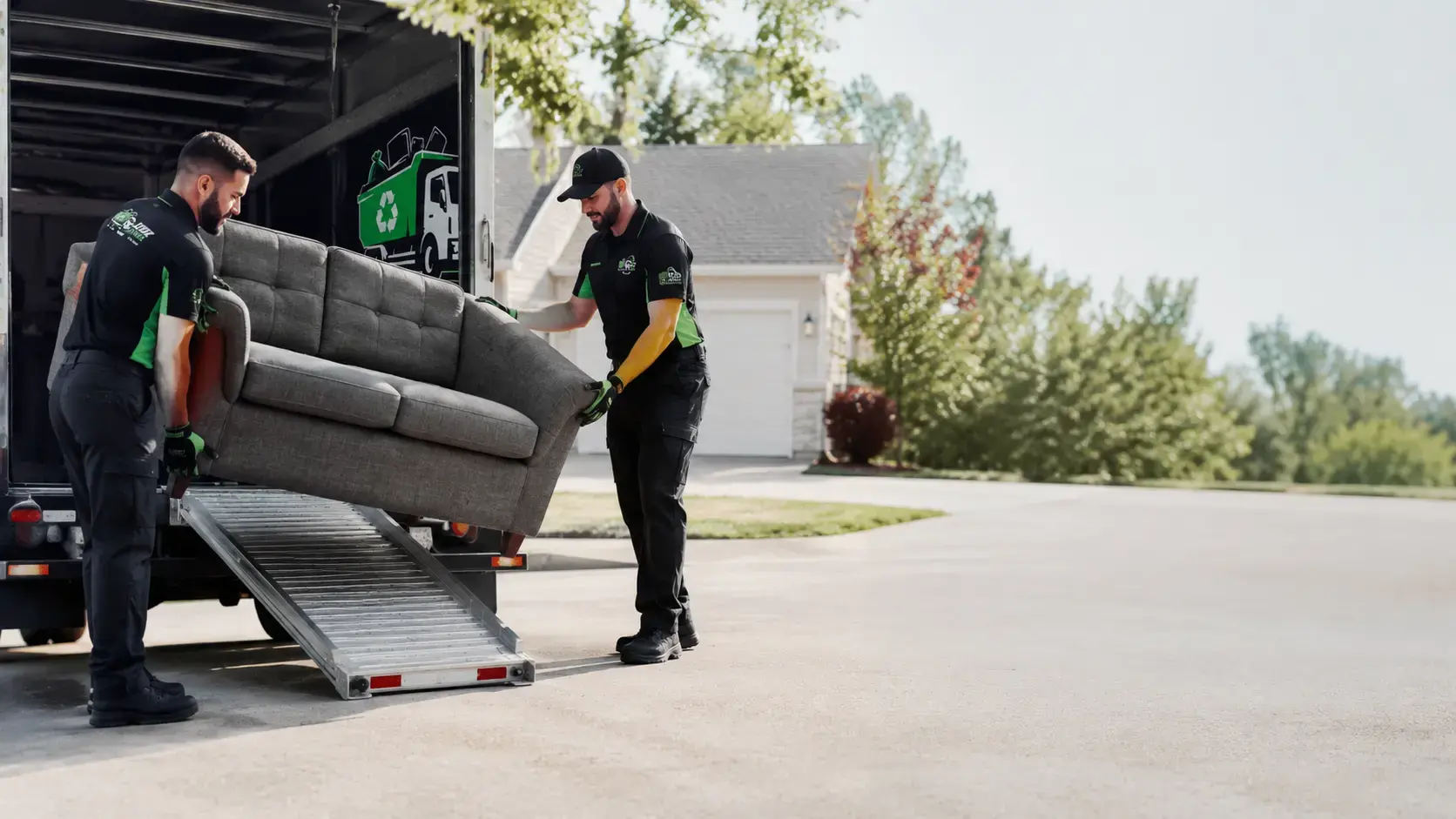
Sofa removal can be more complicated than putting a couch on the curb, especially when local rules, building access, and pickup timing vary across the United States. This guide explains costs, pickup options, and disposal choices so you can plan a cleaner, safer removal.
Why Sofa Removal Takes More Planning Than People Expect
Sofa removal sounds simple until you start thinking through the details: the couch is too wide for the hallway, the sleeper mechanism makes it extremely heavy, the apartment elevator has a time limit, or your city only accepts bulk items on certain days. Across the United States, local disposal rules can vary widely from one municipality to the next, which is why planning ahead helps you avoid fines, missed pickups, and last-minute stress.
Most sofas are bulky, awkward, and difficult to move without damaging walls, doors, flooring, or stair rails. Sectionals often need to be separated, recliners may have metal frames, and sleeper sofas can require extra hands because of the hidden mattress and hardware. If you are clearing space before a move, replacing living room furniture, handling a rental turnover, or cleaning out a property after a renovation, professional couch removal services can keep the project moving without requiring you to borrow a truck or guess where the sofa should go.

The key is to think about sofa removal as a small logistics project. You need to know what type of couch you have, how it will leave the property, whether building or HOA rules apply, and where it can legally go afterward. A little preparation can make the difference between a smooth pickup and a couch sitting outside in the rain for a week.
What Affects Sofa Removal Costs
Sofa removal costs are usually based on volume, labor, access, and disposal requirements. A small loveseat on the first floor is very different from a heavy sleeper sofa in a third-floor walk-up. Likewise, a single couch from a suburban garage is easier to remove than multiple pieces from a downtown apartment building with loading dock restrictions.
Most professional hauling teams consider how much space the couch takes up in the truck, how many people are needed to move it safely, and whether the item can be donated, recycled, or must be taken to an approved disposal facility. Local landfill or transfer station fees can also affect pricing, especially in areas with strict bulk item rules.
Common Cost Factors for Couches and Sectionals
Before requesting pickup, it helps to identify the details that may change the estimate. Be ready to describe the furniture clearly so the crew can plan for the right equipment and labor.
- Size: Loveseats, three-seat sofas, oversized couches, recliners, and sectional pieces all take up different amounts of truck space.
- Weight: Sleeper sofas, reclining couches, and furniture with metal frames are often heavier than standard upholstered couches.
- Access: Stairs, tight hallways, elevators, long driveways, gated communities, and loading zones can affect removal time.
- Condition: Clean, reusable furniture may be eligible for donation, while torn, wet, broken, or pest-exposed furniture may require disposal.
- Number of items: Adding coffee tables, end tables, rugs, mattresses, or other junk may change the truck volume and overall price.
- Local rules: Some areas require appointments, disposal tags, or specific drop-off locations for upholstered furniture.
If you are comparing quotes, ask whether the estimate includes labor, loading, hauling, and disposal. A lower price may not be helpful if you still have to move the couch to the curb or pay separate dumping fees.
Pickup Options for Old Sofas
There are several ways to handle sofa removal, and the best choice depends on your timeline, budget, building rules, and the condition of the couch. For many households, the main options are professional pickup, municipal bulk collection, donation, resale, or self-hauling.
Professional pickup is usually the most convenient option when the sofa is heavy, when you cannot leave items outside, or when you are working around a move-out deadline. Municipal bulk pickup may be affordable, but it often requires advance scheduling and may only collect items from the curb. Donation can be a good choice for gently used furniture, but many organizations will decline items with stains, odors, rips, pet damage, or missing cushions.
Self-hauling can work if you have a suitable vehicle, help with lifting, and access to an approved disposal site. However, it can become frustrating if the couch does not fit in the truck, if the transfer station is closed, or if local staff reject the item because of upholstery, bed bugs, or other restrictions. For broader cleanouts that include more than one bulky item, you may also want to compare professional junk removal options so everything can be cleared in one trip.

Where Can I Throw Away a Couch?
Questions like "where can I throw a couch away" or "where to throw away couch" come up often because couches do not fit neatly into standard trash systems. In many cities, upholstered furniture is considered a bulk item, and residents must follow special collection rules. Some communities allow curbside bulk pickup by appointment, while others require delivery to a transfer station, landfill, or designated bulky waste site.
Before putting a sofa outside, check whether your local waste department requires a pickup request, special sticker, proof of residency, or a limit on the number of bulk items. In some apartment and condo communities, placing a couch near the dumpster is not allowed and can lead to fines from the property manager or HOA. Weather also matters. A couch left outside during heavy rain can become waterlogged, harder to move, and less likely to be accepted for donation or reuse.
For sofa removal, the most common disposal routes include:
- Donation centers: Best for clean, gently used sofas that meet the organization’s acceptance standards.
- Municipal bulk pickup: Useful when your city offers scheduled curbside collection and the item meets local guidelines.
- Transfer stations: A practical option for residents with a truck and proper documentation, though fees may apply.
- Furniture recycling: Available in some areas for metal frames, wood, foam, and textiles, depending on local programs.
- Professional hauling: Convenient when you need in-home removal, fast scheduling, or help navigating disposal rules.
If you are unsure where your couch can go, a hauling company that regularly handles couch disposal can often help determine whether donation, recycling, or disposal is realistic based on the item’s condition and local options.
Apartment, HOA, and Rental Considerations
Sofa removal can be more complicated in apartments, condos, HOA neighborhoods, and rental properties. Many buildings require residents to reserve elevators, use specific service entrances, protect floors, or schedule moves during limited daytime hours. HOAs may restrict curbside placement or require bulk items to be hidden from street view until pickup day.
Renters should also think about move-out inspections. Leaving an old couch behind can result in disposal charges, withheld security deposits, or delays in turning over the unit. Landlords and property managers often need quick couch disposal between tenants, especially when a unit has to be cleaned, painted, and listed again within a few days.
In suburban homes, the challenges are different but still important. Sofas may be stored in basements, garages, bonus rooms, or screened porches. After storms, renovations, or estate cleanouts, couches can be mixed with general clutter, construction debris, and damaged household goods. When a pickup involves multiple bulky items, scheduling sofa and couch removal ahead of time can prevent piles from spreading into driveways, alleys, or shared storage areas.

Sofa Removal Options Compared
Choosing the right sofa removal method depends on what you value most: cost, convenience, speed, or reuse. The comparison below can help you decide which approach fits your situation.
| Removal Option | Best For | Potential Drawbacks |
|---|---|---|
| Professional sofa pickup | Heavy couches, stairs, tight timelines, in-home removal, rental turnovers | Usually costs more than city pickup, but includes labor and hauling |
| Municipal bulk pickup | Residents with curb access and flexible schedules | May require appointments, tags, waiting periods, and curb placement |
| Donation | Clean, gently used sofas in good condition | Not all couches are accepted, and pickup windows may be limited |
| Self-hauling | People with a truck, lifting help, and nearby disposal access | Requires time, labor, fuel, and knowledge of local disposal rules |
| Resale or giveaway | Usable couches with no damage, odors, or stains | Can take time and may involve no-shows or pickup coordination |
If you need the couch gone before a new furniture delivery, lease end date, real estate showing, or renovation start, professional pickup is often the most predictable choice.
How to Prepare for Sofa Pickup
A few simple steps can make sofa pickup faster, safer, and less stressful. Start by measuring doorways, hallways, stairwells, and elevators if the couch is unusually large. Remove throw pillows, blankets, slipcovers, and any items hidden under the cushions. If the sofa is a sectional, separate the pieces if you can do so safely.
Before the crew arrives, clear a walking path from the couch to the exit. Move small tables, lamps, rugs, pet bowls, and fragile décor out of the way. If you live in a building with access rules, reserve the elevator or loading area in advance. For gated communities, provide entry instructions so pickup is not delayed.
Use this quick preparation checklist:
- Confirm the pickup date, arrival window, and contact number.
- Describe the couch accurately, including sleeper mechanisms or recliners.
- Clear a path through rooms, hallways, stairs, and exterior walkways.
- Check building, HOA, or landlord rules for furniture removal.
- Keep pets and children away from the work area during lifting.
- Point out any fragile walls, narrow turns, or loose flooring before removal begins.
Planning ahead is especially important during busy moving seasons, after severe weather, and near the end of the month when rental turnovers increase. If you want a direct scheduling path, use the button below to begin.
FAQ About Sofa Removal
Can I Leave a Sofa on the Curb?
Sometimes, but only if your local bulk pickup program allows it. Many cities require advance scheduling, a specific placement location, or a limited set-out window. Apartments, condos, and HOA neighborhoods may have stricter rules than the city itself, so always check before moving a couch outside.
What If My Couch Is Too Heavy to Move?
Heavy sofas, sleeper couches, and reclining sectionals are common reasons people hire professional hauling help. A trained crew can remove the item from inside the home, navigate stairs or tight turns, and load it without requiring you to risk injury.
Can a Sofa Be Donated Instead of Thrown Away?
Yes, if it is clean, structurally sound, and accepted by a local charity or reuse program. Sofas with stains, odors, pet damage, broken frames, missing cushions, or pest concerns are often rejected. When donation is not possible, proper couch disposal through an approved facility is the better option.
How Fast Can Sofa Pickup Happen?
Timing depends on availability, your location, building access, and the size of the job. Same-day or next-day appointments may be available in many service areas, while apartment buildings and HOAs may require extra coordination for elevators, loading docks, or parking.
Plan Sofa Removal With Less Stress
Sofa removal is easier when you know your options before the couch is sitting in the hallway or blocking the garage. Costs depend on size, weight, access, disposal rules, and timing, while pickup choices range from city bulk collection to donation, self-hauling, and professional removal.
If you are asking where can I throw away a couch, the safest answer is to check local rules first and choose a disposal method that matches the condition of the sofa. For heavy couches, apartment move-outs, landlord turnovers, renovation cleanups, and tight deadlines, professional sofa removal can save time and reduce the risk of damage or fines.
Junk Removals 365 helps with practical, responsible couch disposal so you can clear the space and move on to the next part of your project.

Written by
junk removals 365 team
The Junk Removals365 Team shares expert tips and insights on junk removal, cleanouts, recycling, and clutter-free living, helping homeowners and businesses keep their spaces clean and organized.
Our Related Services
Junk Removal
Full service junk removal for homes and businesses — same-day pickup, upfront pricing, and eco-friendly disposal you can count on.
Furniture Removal
From single pieces to full-room clearouts — we remove any furniture, any size, from any room.
Mattress Removal
Responsible mattress disposal that keeps 90% of materials out of the landfill — any size, any floor.